Our project was a community heritage tour of Steveston, designed to bring people together while learning about the history of one of Richmond’s most important historic communities.
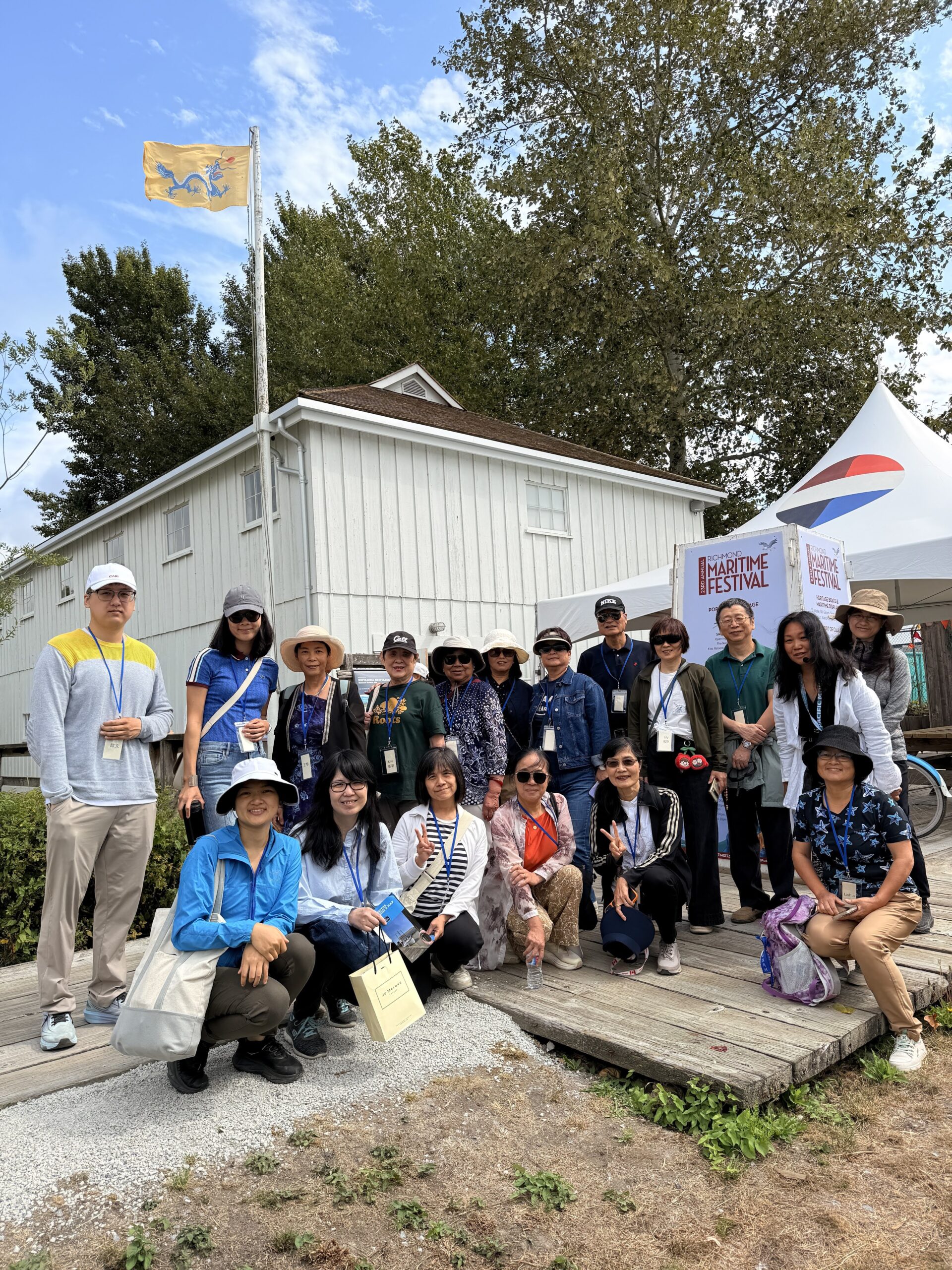
We intentionally planned the tour to take place on the same day as the Steveston Maritime Festival. We felt that combining our heritage tour with the festival would make the event more attractive and give participants an opportunity to experience both Steveston’s history and its lively community atmosphere. Because of this timing, we had only about one week from planning to implementation. Despite the short preparation period, 24 members joined us, which was a very encouraging result. Participants travelled from Vancouver, Maple Ridge, Surrey, Burnaby, Delta and other parts of Metro Vancouver. Some were visiting Steveston for the first time.
One of the biggest highlights was having an experienced volunteer interpreter guide our tour. She has volunteered for many years at Steveston Village historic sites and has received specialized training in interpreting the area’s history. Her knowledge, stories and explanations brought the sites to life and allowed participants to learn far more than they could have from visiting on their own. We were very grateful for her contribution, and she was also happy to share Steveston’s history with our group. We hope she can join us again next year.
Careful planning of the schedule and walking route helped the day run smoothly. We wanted everyone to have enough time to listen, observe, ask questions and enjoy the sites without feeling rushed. The weather was also ideal—not too hot and not too cold—so everyone was able to listen carefully, explore comfortably and enjoy the day.
At Britannia Shipyards, we visited the Chinese Bunkhouse and learned about the difficult living and working conditions of early Chinese Canadian labourers. Seeing the workers’ housing, engineering staff housing and office buildings helped participants understand the differences in living conditions and social positions at that time.
We also visited the Point House exhibits and learned about Japanese Canadian families in Steveston, including the Murakami family and their important role in the local fishing community. At the Gulf of Georgia Cannery, participants saw historic machinery and the former production line and heard stories about the demanding lives of cannery workers.
Another memorable part of the day was seeing how engaged everyone became. Participants listened carefully, asked questions and continued discussing what they had learned between stops. At lunchtime, we also enjoyed distinctive charcoal-fired pizza from Moncton Pizza.
Through this project, we learned that local history becomes much more meaningful when people experience it where it actually happened, especially with a knowledgeable interpreter. Several participants told us they hoped we would organize another Steveston tour next year, which was one of the most rewarding outcomes of the project.