Our project, “AI for Seniors: Safe, Practical, and Confident Use,” brought neighbours together in Richmond to explore artificial intelligence in a welcoming community setting. We wanted to help seniors feel more comfortable with new technology, discover practical ways to use AI, and understand the importance of checking information and protecting their privacy.
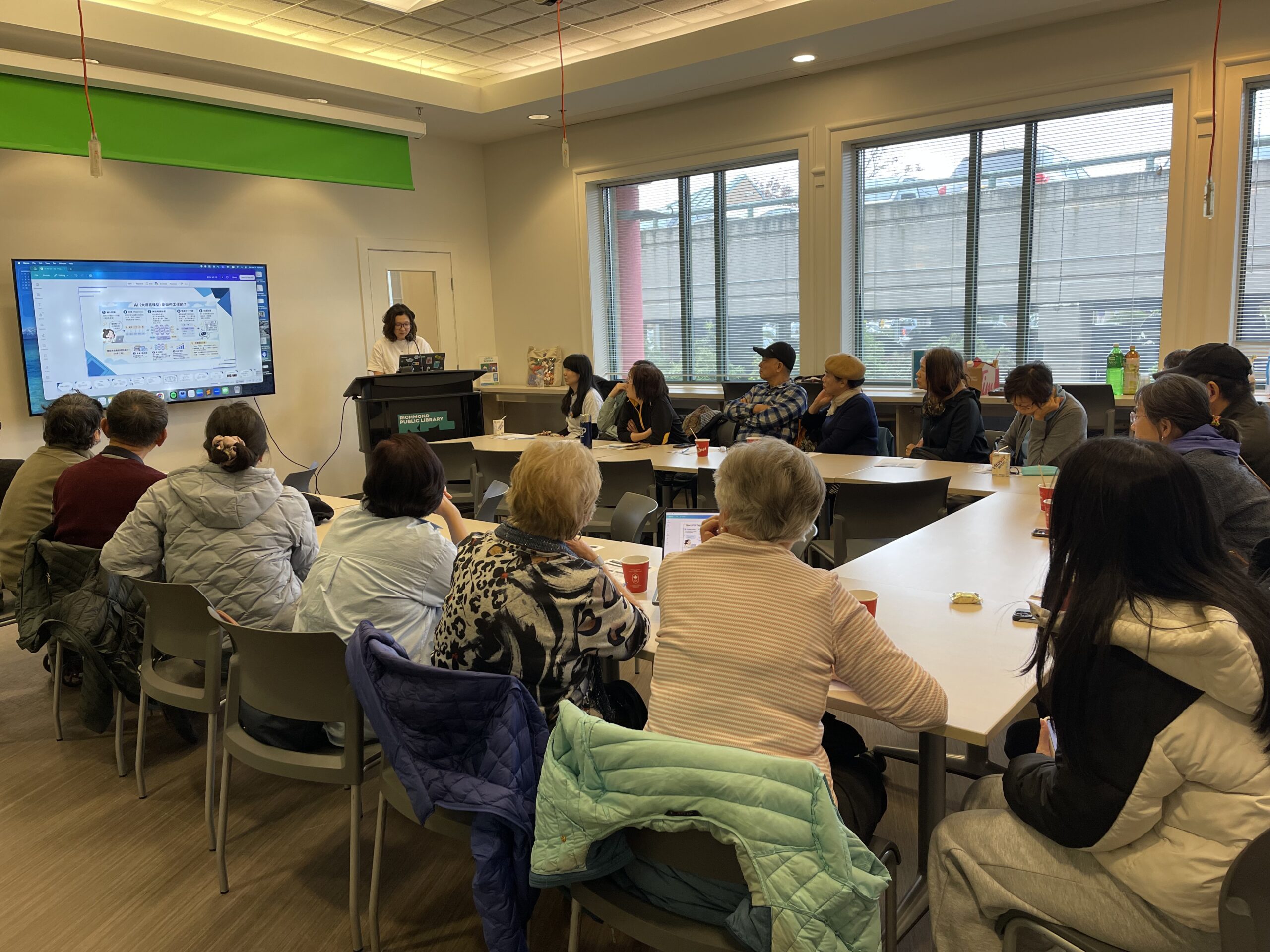
We planned two workshops: a Mandarin session in the morning and an English session in the afternoon. Offering sessions in both languages was an important part of making the project accessible. Our planning focused on beginner-friendly explanations, everyday examples, and opportunities for participants to ask questions. Organizers, presenters, and participants all helped create an enthusiastic and supportive atmosphere.
One unexpected challenge involved the library’s registration system. A registration issue resulted in several participants who spoke only English signing up for the morning Mandarin session. When we explained that an English session was available in the afternoon, several said they could not attend at that time.
We wanted them to be able to participate, so we adapted our plan. We asked the afternoon presenter to sit beside the English-speaking participants and provide simultaneous interpretation during the morning workshop. This practical solution allowed them to follow the presentation and take part alongside their neighbours. It also showed us how valuable it is to have a team willing to respond flexibly when things do not go as expected.
The response to the workshops was exceptionally warm and enthusiastic. Participants asked questions, shared their curiosity, and expressed strong interest in learning more. Several repeatedly asked when and where we would hold the next event. Their enthusiasm was one of the most encouraging outcomes of the project and suggested a clear interest in further opportunities to learn about AI together.
Through this experience, we learned that accessibility involves more than offering separate language sessions. It also means listening to participants’ circumstances and adapting in the moment. For future events, we would work with the registration provider to make the session language clearer and confirm that information with participants beforehand.
Most of all, the project reminded us that community learning depends on human connection. A welcoming environment, patient explanations, and a willingness to solve problems together can help people feel included and more confident about exploring something new.