Using our Neighbourhood Small Grant, Paola Qualizza and I partnered with the Bowen Island Public Library to coordinate three workshops in April, each focused on a different repair skill. After several years coordinating Bowen Island’s bi-annual Fix-It Fairs, Paola had seen a growing appetite in the community to learn repair skills firsthand, and heard from several long-time repair volunteers who were keen to share their knowledge more intentionally. We recruited our three facilitators directly from that pool of Fix-It Fair volunteers.
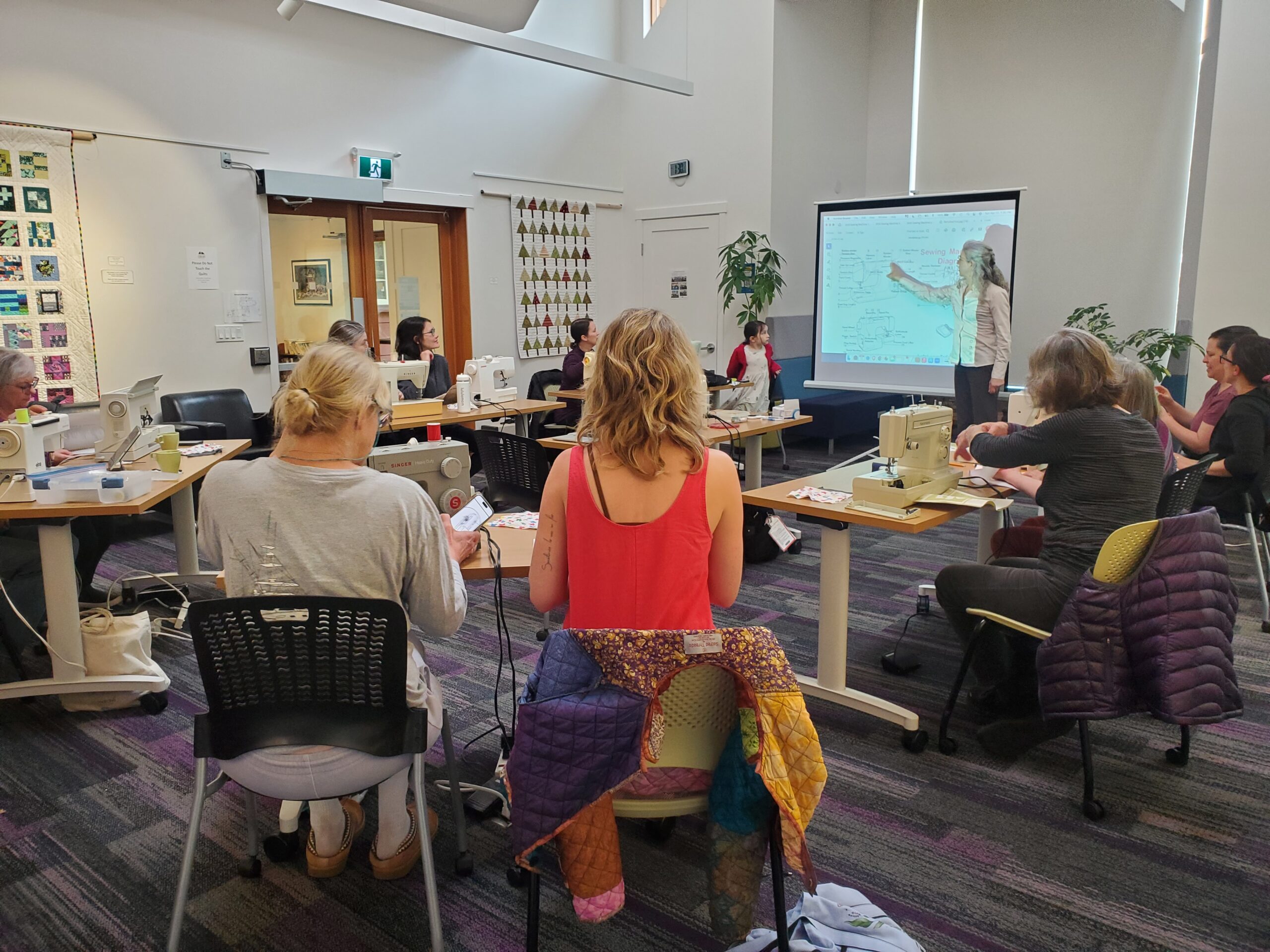
Yvette Gabrielle kicked off the series with Sewing Machine 101, teaching 12 participants about sewing machine basics: how to wind a bobbin, thread their machine, and try different stitches. Participants brought their own machines, which made the learning hands-on and immediately practical. The following week, Steve Elves led Electrical Repairs 101 with support from two helpers (Steve and Chris), covering safety, theory, and the practical skill of rewiring a lamp. 10 participants attended, and several brought broken lamps from home that they successfully repaired on the day. The series wrapped up with Krista Hennebury’s Hand Mending 101, where 10 participants learned visible mending stitches for denim and knits, each working on a piece of their own clothing.
One of the challenges we had was setting registration caps for the workshops, since our facilitators had limits on how many learners they could comfortably teach. The library let us know that typically one third to one quarter of registrants don’t show on the day. It was difficult to know how many spots to open up without risking the class being too large or too sparse on the day, the actual number of attendees ended up being just about right for each workshop.
Engagement and feedback from attendees across all three workshops were excellent. The biggest learning for us as organizers was around facilitator support. The electrical repairs workshop benefited from having two additional helpers on hand, which meant participants got the hands-on assistance they needed. The other two workshops didn’t have that same support structure, and we noticed attendees would have benefited from some extra one-to-one support. If we run this series again, we’d look to bring in one or two skilled support volunteers for each facilitator.
Overall, this project demonstrated real appetite in our community for skill-sharing around repair and reinforced that the Fix-It Fair volunteer network is a wonderful resource not just for fixing things, but for teaching others to do the same.