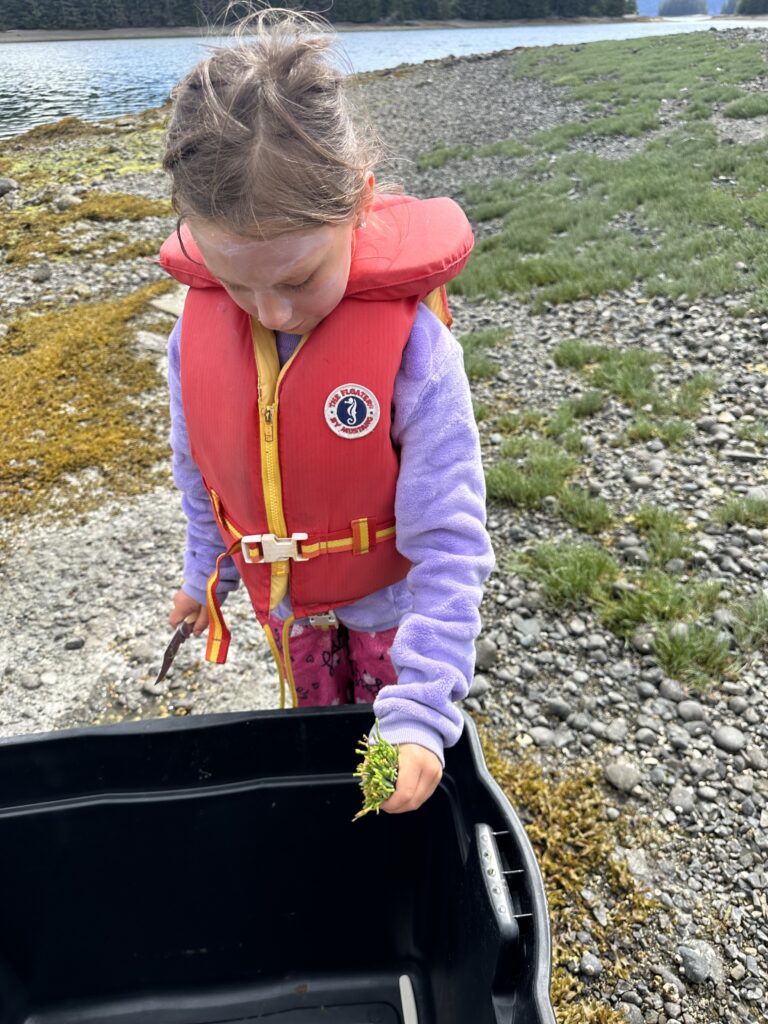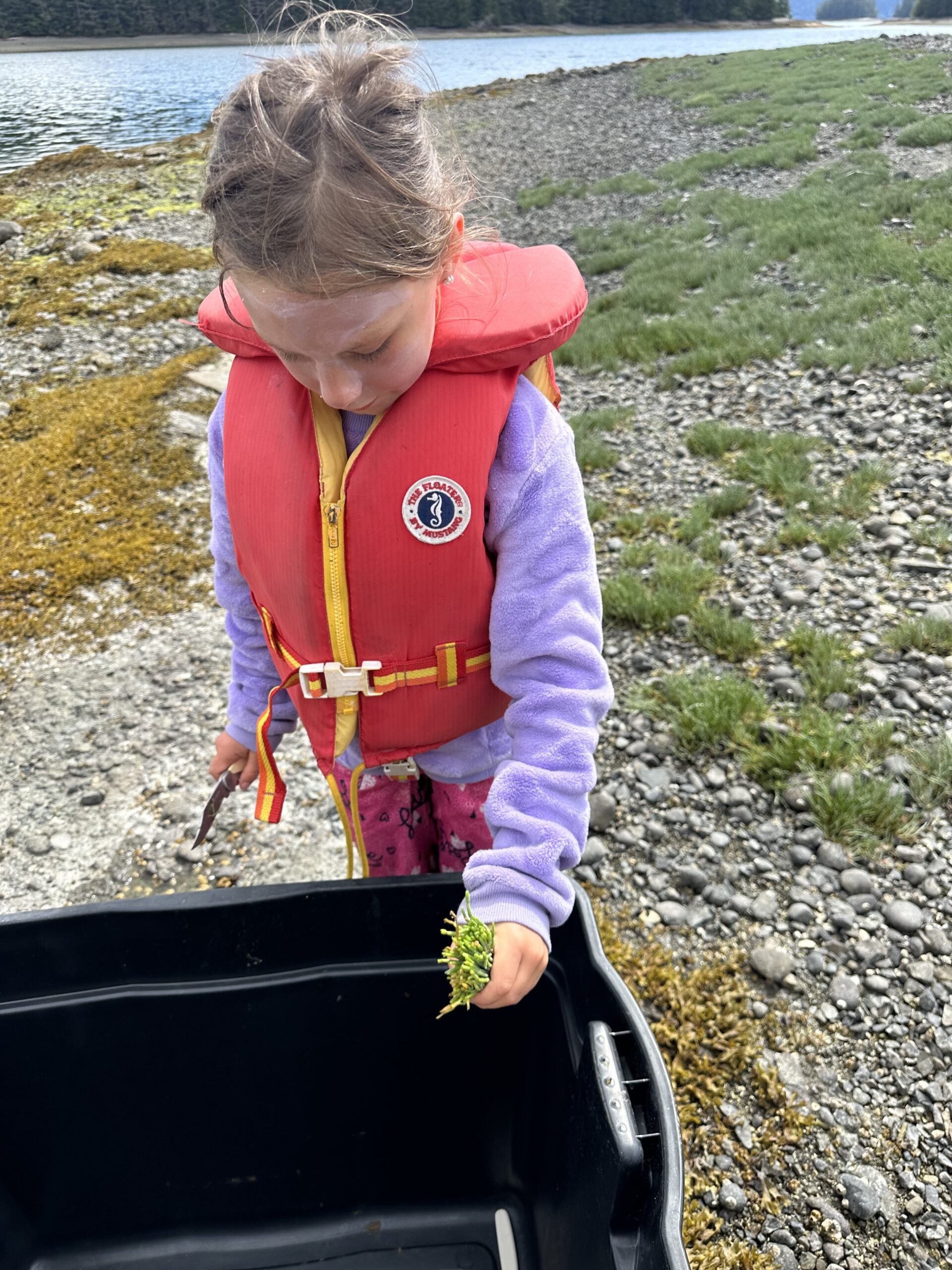
Our project, Shore to Kitchen, was designed to bridge ecological learning with practical skills by helping participants explore the intertidal zone of Haida Gwaii and transform locally harvested kelp into nutritious, culturally respectful recipes. From the beginning, our planning focused on safety, accessibility, and creating a learning environment rooted in curiosity and respect for the land and ocean.
We began by identifying accessible shorelines and timing our sessions with the tides to ensure safe and meaningful exploration. Planning also included coordinating with knowledge holders, checking seasonal species availability, and preparing educational materials that covered kelp ecology, sustainable harvesting, and the cultural context of food gathering in Haida Gwaii. Gathering the right equipment, harvesting tools, food-safe processing materials, and portable cooking supplies was essential to running smooth sessions.
The biggest challenge we encountered was the unpredictability of coastal conditions. Weather and tides shifted frequently, requiring us to stay flexible. We adapted by preparing backup teaching components that could be done indoors when the shoreline was unsafe. These adjustments taught us the value of resilience and planning for multiple contingencies when working in a remote marine environment.
Another challenge was making sure participants of different ages and experience levels all felt included. We solved this by pairing hands-on exploration with simple, engaging recipe activities, such as kelp chips, broths, and seasoning powders, that allowed everyone to participate at their own pace. Younger participants enjoyed the tactile experience of identifying and touching kelp species, while adults appreciated deeper discussions on nutrition, sustainability, and regional food systems.
The project involved a diverse group: local families, young learners, Elders, community cooks, and marine educators. Their involvement enriched every session. Elders shared stories and traditional perspectives, cooks contributed creative recipe ideas, and educators supported species identification and ecological explanations. These collaborations created a learning space where science, culture, and food came together naturally.
What we learned throughout this project is that kelp is not only a nutritious ingredient but also a powerful teaching tool. Participants left with a deeper understanding of the intertidal ecosystem, increased confidence in harvesting respectfully, and practical knowledge they could bring back to their homes and families. We also learned that when people connect directly with their shoreline, they become more committed to its protection.
Shore to Kitchen strengthened community connections, inspired new conversations about local food sovereignty, and reinforced the importance of ecological literacy in everyday life. It was a project that fed both the mind and the spirit, and we are excited to continue building on its success.