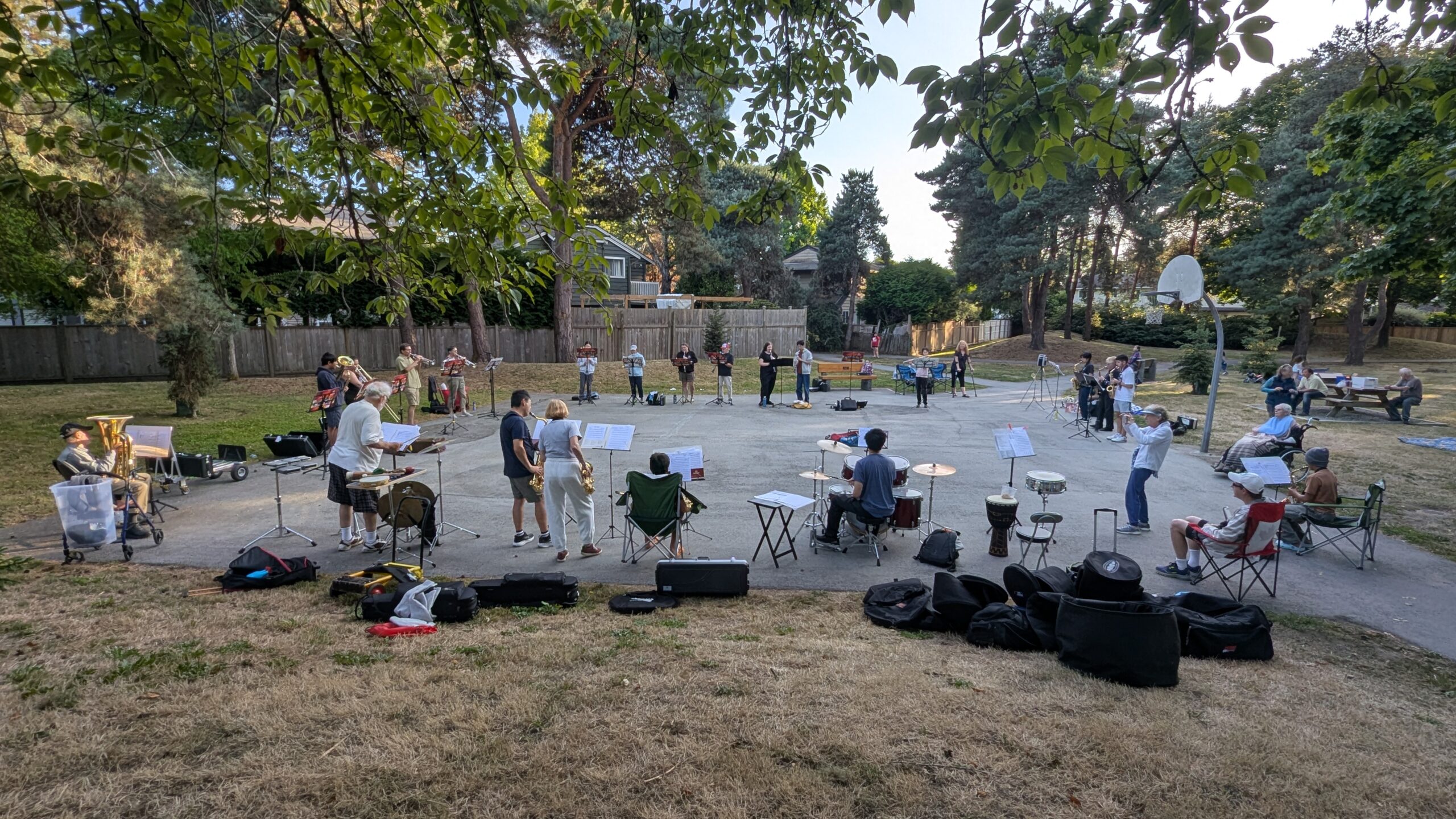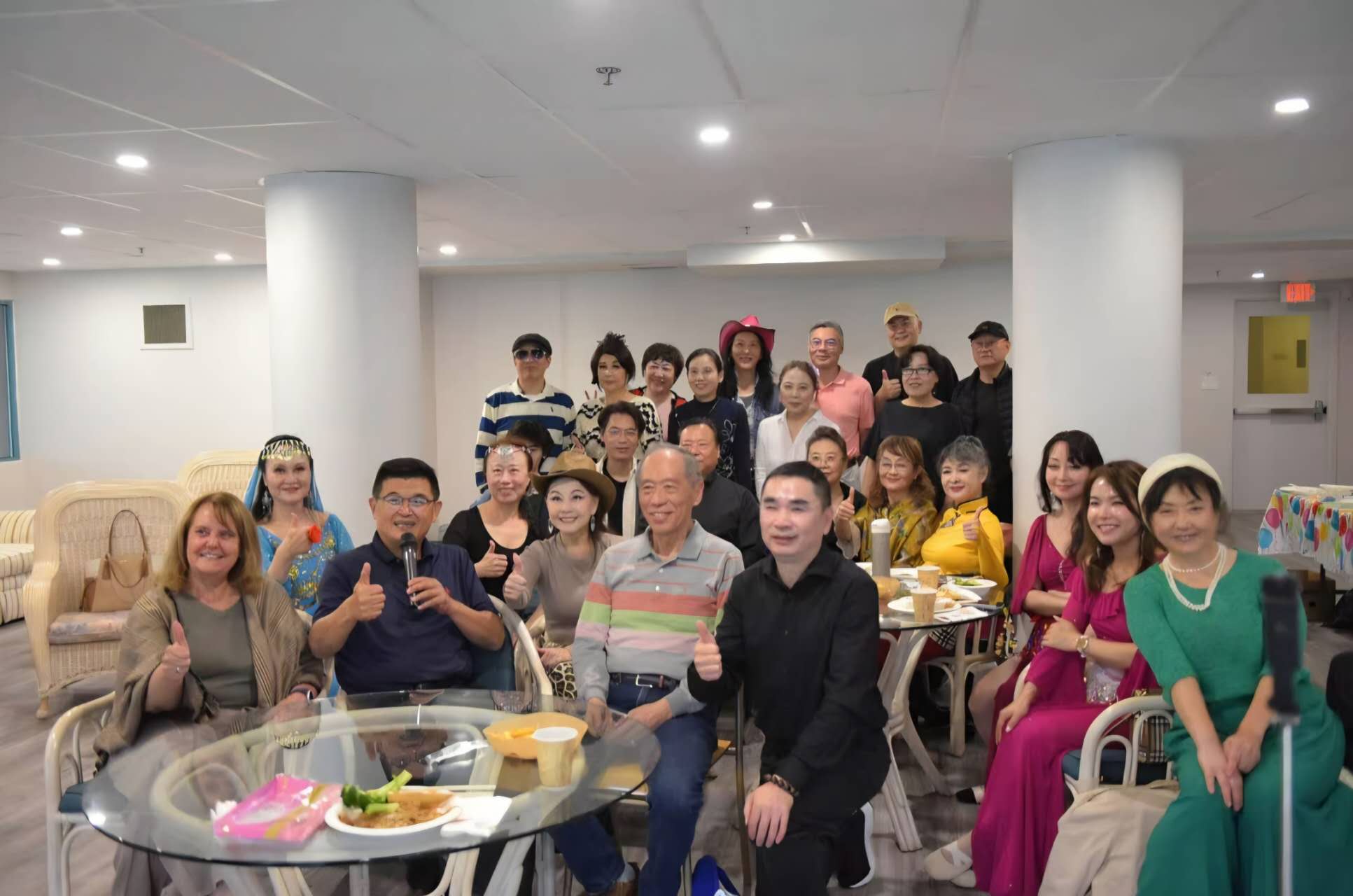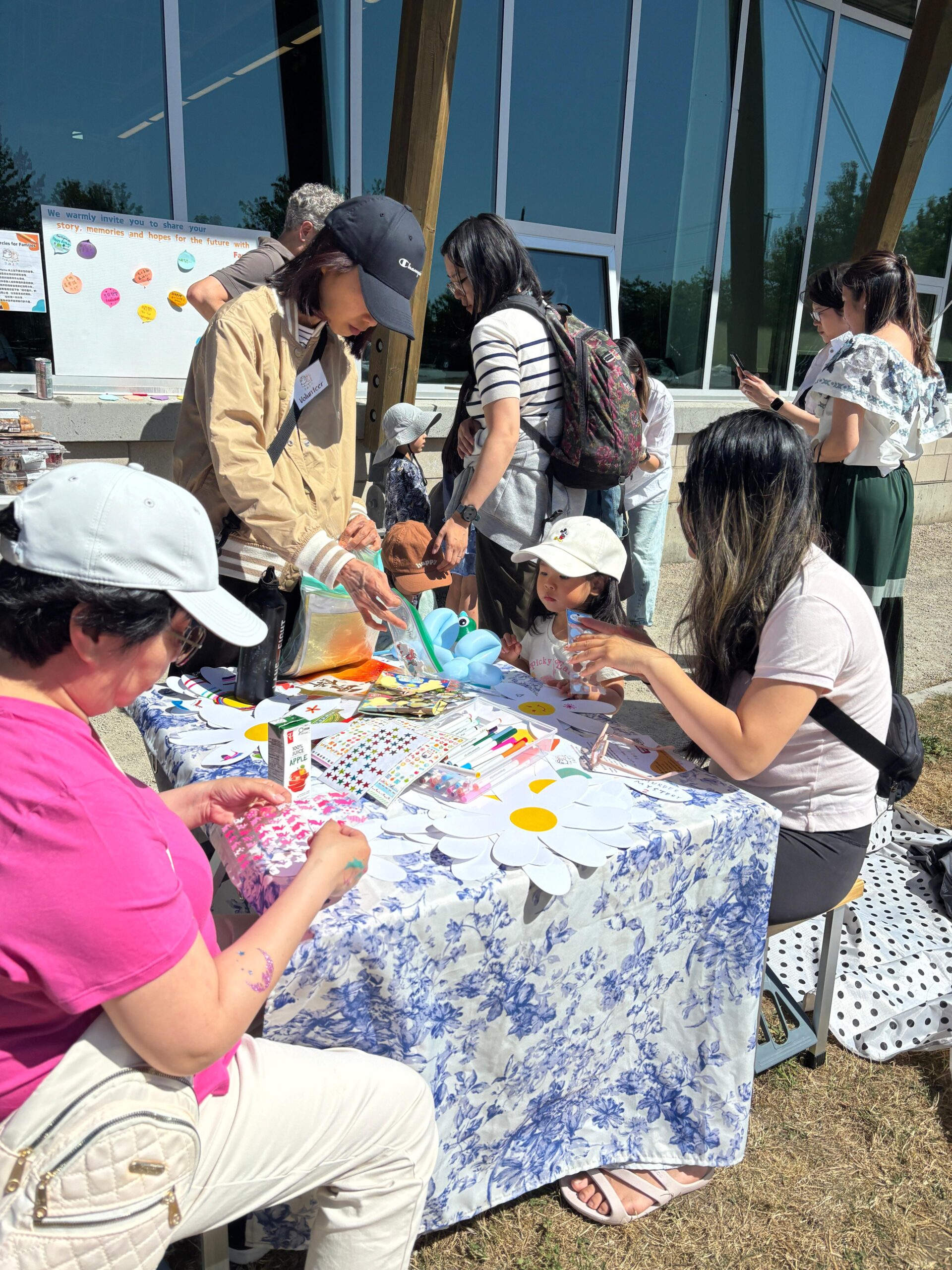
Our NSG project, Stories, Songs & Crafts: Richmond Family Neighbour Circles, took place on June 20, 2026, at Thompson Community Centre and brought together over 60 neighbours, from infants in strollers to seniors, in one shared space. The goal was to create a low‑barrier, multilingual gathering where families could meet, play, and learn from one another through storytelling, songs, and simple crafts.
Planning started with listening. We reached out to neighbours, church partners, and families from previous years to ask what would feel welcoming this time: shorter program segments, more time for informal chatting, and activities that were easy for children of different ages. Based on this feedback, we designed a flow that alternated between group moments and open mingling: a welcome circle, a Cantonese-English story and song time, intergenerational games, and several craft tables where people could move at their own pace.
Promotion was intentionally local and relational. We used word‑of‑mouth, WhatsApp groups, simple posters at the centre and nearby churches, social media, and email lists, making sure information went out in both English and Chinese. On the day, families arrived early and stayed longer than expected, which was a good sign but also created a challenge around space and noise. We responded by opening an extra corner for quieter play and asking volunteers to gently guide traffic between activity stations so everyone could participate safely.
The team included family members, neighbours, and friends who helped with set‑up, registration, translation, facilitation, and clean‑up. Seniors and long‑time residents played an important role: they shared stories of moving to Richmond, taught children simple traditional games, and supported parents who were attending a community event for the first time. Younger volunteers helped with crafts, taking photos, and welcoming people as they arrived.
One key learning was how powerful repeated, small interactions can be. Parents reported that just seeing familiar faces from school, church, or the playground in a structured but relaxed environment helped them feel less alone. Several newcomers mentioned that hearing Cantonese, Mandarin, and English in the same room made it easier to join in, even if they were shy at first. We also learned that having flexible seating, clear name tags, and snacks available throughout the event encouraged people to stay and talk.
Overall, the project confirmed that a simple, well‑held space can reduce isolation and strengthen neighbourhood ties. It showed us that families are eager not only to receive support, but also to share their own stories, songs, and skills. For future projects, we hope to build in more time for follow‑up conversations and smaller circles so that the relationships formed at the event can continue to grow between gatherings.