How the Project Came to Life
This project began as an assignment in one of my graduate courses in the Master of Community and Regional Planning program. Our professor challenged us to step outside our comfort zones and design an engagement activity with a community we cared about. As a mother of an autistic child, I immediately thought about the families—like mine—who often feel excluded from typical community events. Many children with developmental disabilities struggle with socialization, and as a result, their families also experience isolation. I wanted to create something small but meaningful that could offer connection, joy, and a sense of belonging.
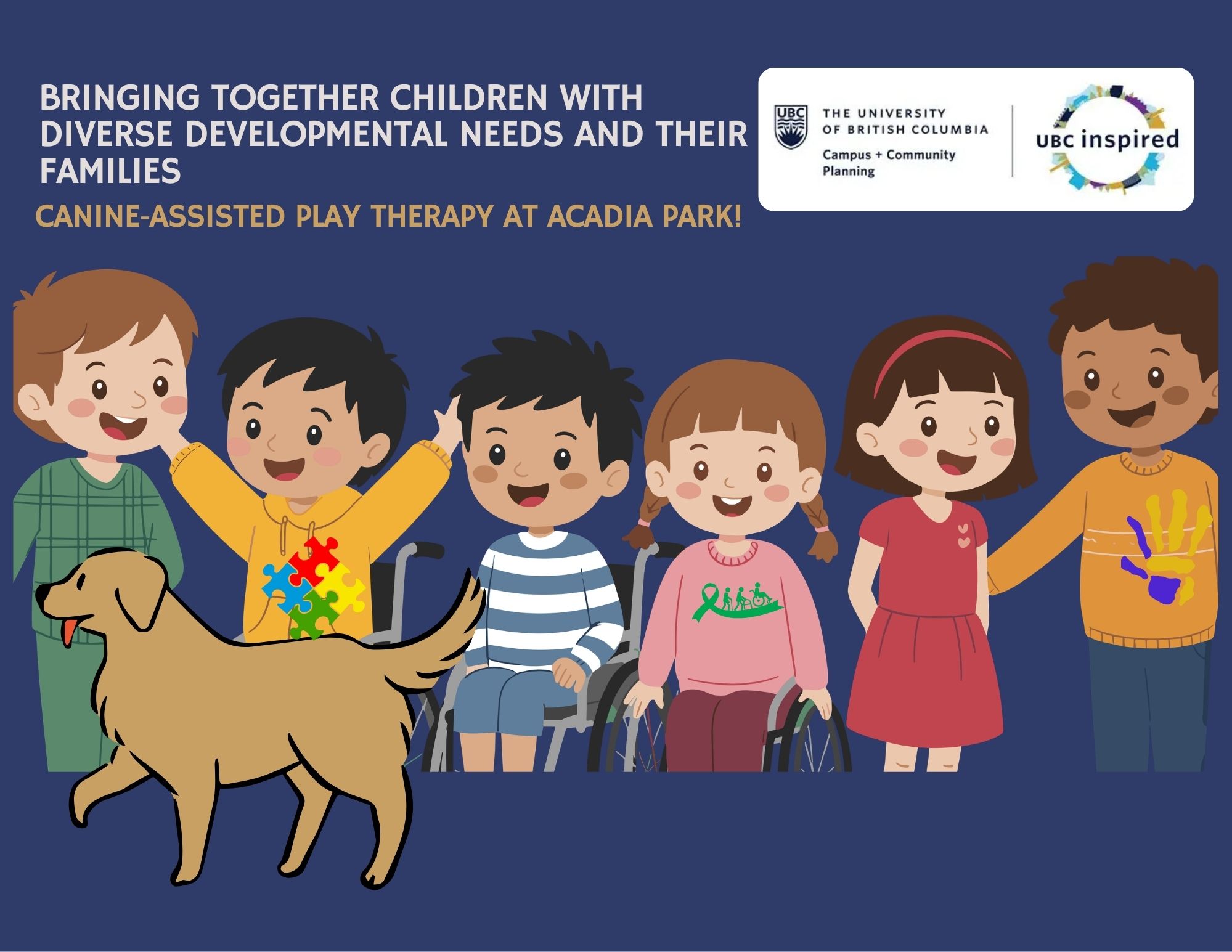
After exploring several ideas, I landed on the concept of a therapy‑dog–supported occupational therapy session. Trained dogs can act as gentle mediators, helping children stay calm, focused, and open to interaction. The idea fit the budget and felt like a natural way to create a safe, welcoming environment.
Planning took about five weeks, followed by two weeks of promotion through Acadia Park newsletters, Facebook groups, and WhatsApp networks for families of children with disabilities. Initially, the event was limited to UBC student families, but registration was low. Expanding it to include UBC staff families solved the challenge and helped us reach the right audience.
In the end, eight families registered and five attended. The team supporting the session included two occupational therapists, a physiotherapist, a therapy assistant, and four wonderfully calm, trained dogs. Their professionalism and warmth shaped the entire experience.
What Happened on the Day
Although the event lasted only an hour and a half, the impact was unmistakable. The children were joyful, relaxed, and deeply engaged with the dogs. Parents watched with a mix of relief and gratitude—grateful to see their children welcomed into a space designed specifically for them. One mother told me, “Events like this never happen for our kids,” and that stayed with me.
While the children played, parents connected with one another, sharing experiences about therapies, support networks, and the challenges of navigating disability services. The event became not just an activity, but a moment of community-building.
What I Learned
I learned how powerful small initiatives can be when they are rooted in empathy and lived experience. I also learned the importance of flexibility—adjusting the target audience, collaborating with professionals, and trusting community networks. Most of all, I realized that I can play an active role in shaping a more inclusive UBC community, one small project at a time.