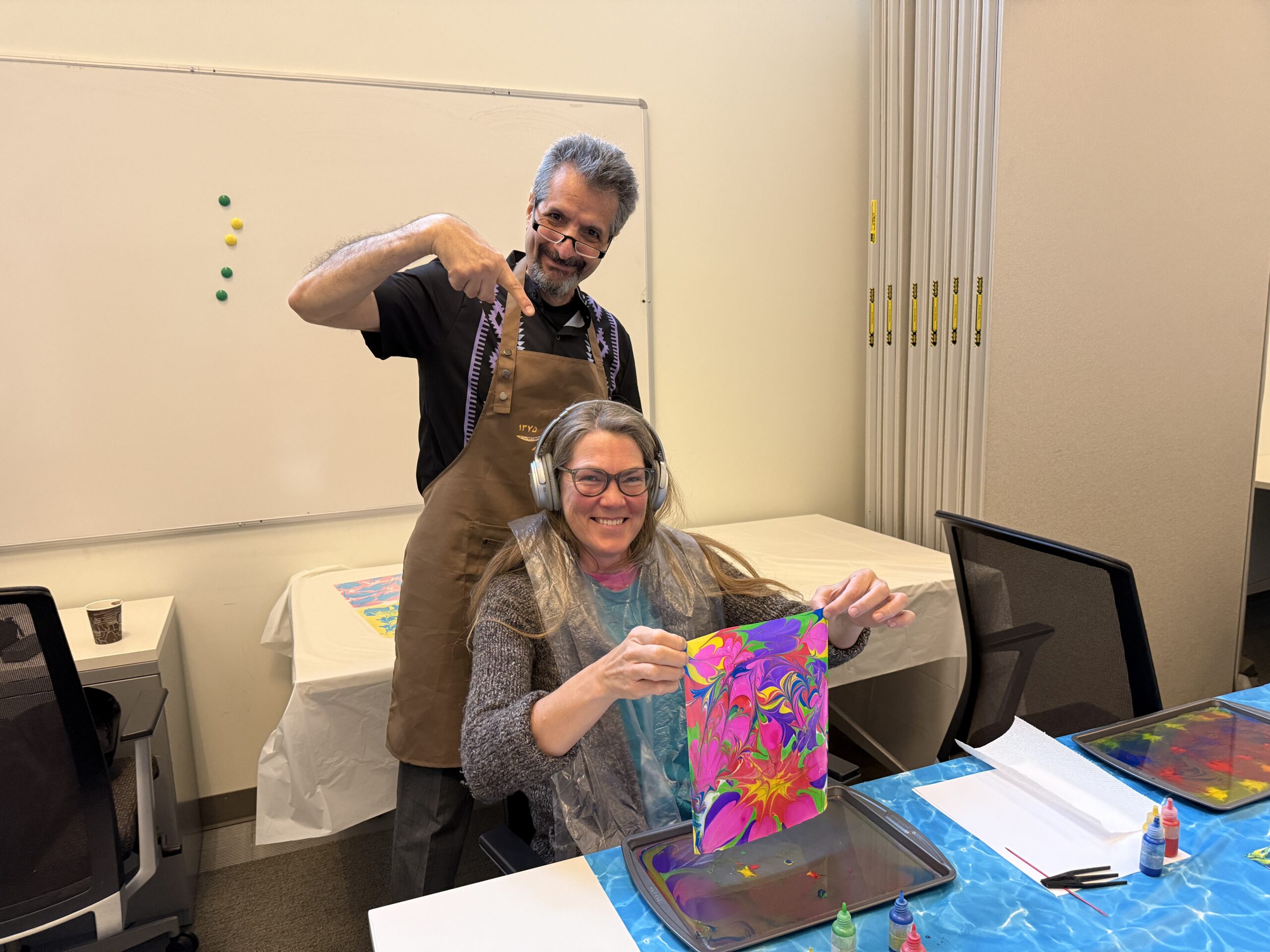
This project began at a crossroads of personal crisis and community need. Last summer, a local BC resident and dentist, Amir, was diagnosed with a brain tumour. As a UBC Medical Student and researcher, I was suddenly navigating the healthcare system from the other side, as a family member. During his recovery, we turned to the traditional art of ABRI (marbling). We discovered that the meditative nature of the art not only aided his personal healing but served as a powerful bridge for social connection.
This inspired our mission to help other older adults in BC to use marbling as a way to heal. Our plan for the UBC Inspiring Community Grant was to bring this unique, low-barrier art form to the UBC campus, specifically to the community partners involved in patient care, including the Centre for Research on Personhood in Dementia, UBC Brain Wellness, and University Neighbourhoods Associations, to provide a space for students, staff, and residents to connect, de-stress, and heal through creativity.
Who Was Involved? The project was a true family and community collaboration involving 8 attendees. My father, Amir, led the technical instruction, sharing his journey of resilience with the participants. He was supported by our volunteers, Ali and Zahra, a local community nurse from the Amir Social Connection & Healthy Aging Society. Together, we coordinated with Debbie Yeh from UBC Campus + Community Planning to ensure the workshop was accessible to a diverse group of participants within the University Endowment Lands.
Leading this project and our initiative to combat social isolation among older adults in BC has been a mission that falls incredibly close to our hearts. Seeing the devastating impact of social isolation on Amir, following his brain tumour diagnosis, and witnessing how his health was transformed through the connection found in art, became our primary catalyst.
We are demonstrating the power of ‘social prescription’ models and the vital role of community in the recovery process. Our work is grounded in medical evidence: we know that social isolation is a significant public health risk, clinically associated with a higher risk of dementia and cognitive decline. By leading this project, we have come to understand that initiatives like ours can be a vital intervention, bridging the gap in care by sharing lived experience and fostering genuine human connection.