We thought about this project because many parents in our neighbourhood are raising young children far from relatives with no support system. Parenthood can be joyful, but it can also be lonely. We wanted to create a weekly space for parents and caregivers of children ages 0–4 to come together. The idea was simple: free, interactive sessions, no toys or screens, just voices, touch, rhythm, and time together. We wanted this event to feel welcoming, useful, and easy to join.
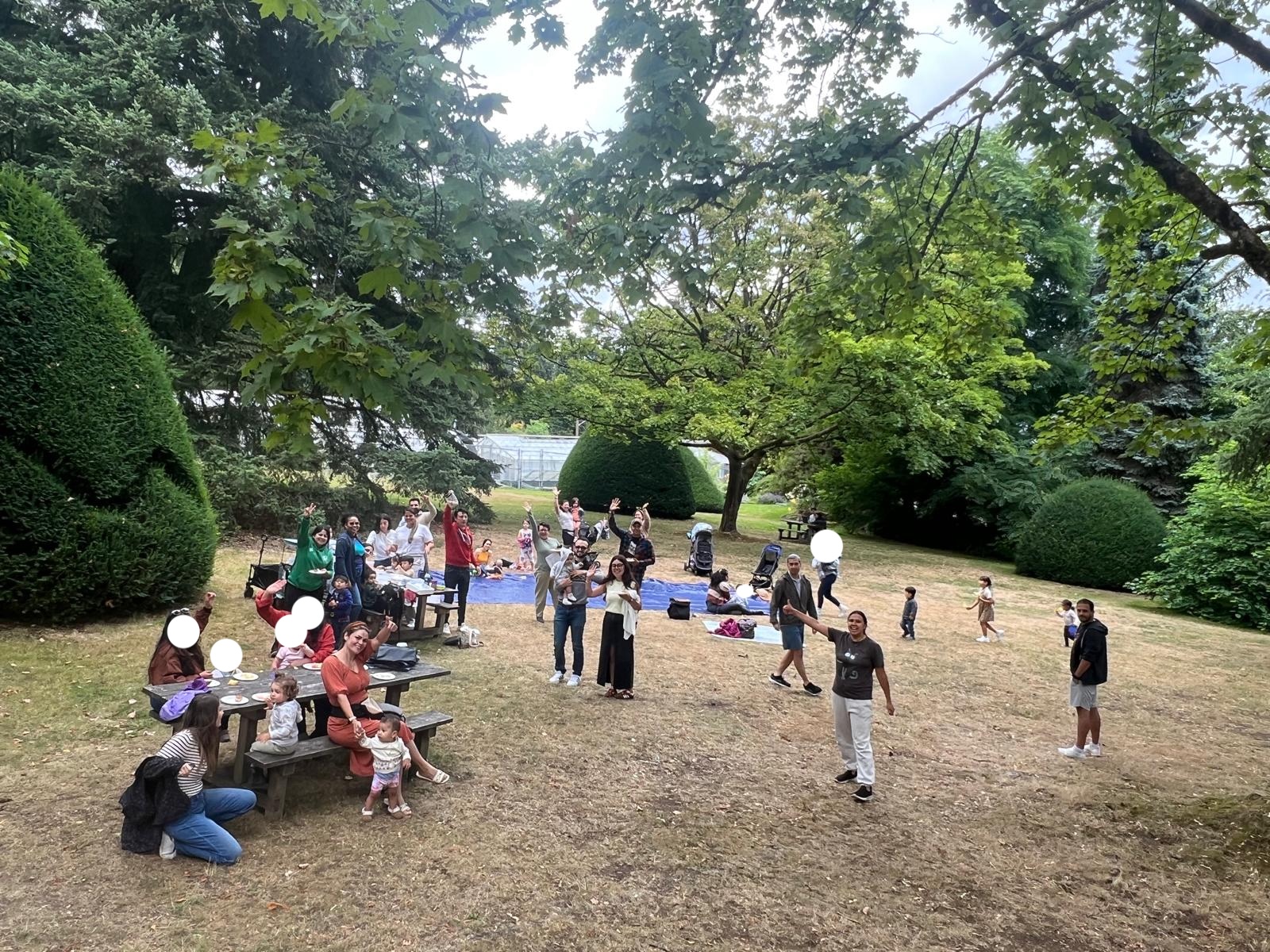
Our activities were centred around Spanish rhymes, lullabies, and finger-plays. We chose to hold the program for four sessions instead of just one event because connections need time, and we wanted to promote connections. The recurring weekly sessions gave families the chance to recognize familiar faces and move from strangers to supporters. That regular contact gave families the close community they were looking for.
After the musical activities, we shared healthy snacks. Sitting together made it easier to talk, exchange advice, and learn about local resources. It also gave a natural opportunity to share child-rearing insights. Children enjoyed this time, and participants were very satisfied. The snack was not an afterthought; it was part of how trust grew.
The program was led by a family support worker who is a certified Parent-Child Mother Goose Program facilitator. Her experience was central. She modelled “serve and return,” the back-and-forth interaction that strengthens the caregiver-child bond. Her guidance created genuine connections with children and caregivers.
30 families were initially interested, but due to the nature of the program delivery, the facilitator capped the attendance at 14 families. However, when cancellations occurred, other waitlisted families were invited to take the available spot for that week. After the last session, we were able to meet 21 families, more than 50 individuals.
Additional community partners were invited to collaborate with our initiative, including Casa de las Americas and New Westminster Public Library. One example of their support was on the date of our 4th and last session, when the weather forecast called for cancellation, NWPL made it possible to use their space while the English Conversation Circle led by ISSofBC was moved to a smaller room. This allowed the series to close successfully.
NSG, caregivers, children, the facilitator, community partners, and supporters all helped make this project possible. Families brought songs, language, questions, care, and practical knowledge.
Participants stated that New Westminster has a large Spanish-speaking population, but not enough programs that bring them together. Parents also had the opportunity to speak about the challenges of raising children without a family support system and expressed that the sessions helped them feel “seen and appreciated.” Other participants highlighted the value of sharing information about city services and helping children develop language and social skills. They asked that programs like this continue and reach more Spanish-speaking families. They also saw it as an investment in Canada’s future.
We learned that a small, consistent program can meet a deep need when it respects culture and makes room for conversation. We learned to plan for weather sooner and trust community partnerships. Most of all, we learned that songs and stories do more than entertain. They help children build language, help caregivers feel supported, and help families feel they belong.